
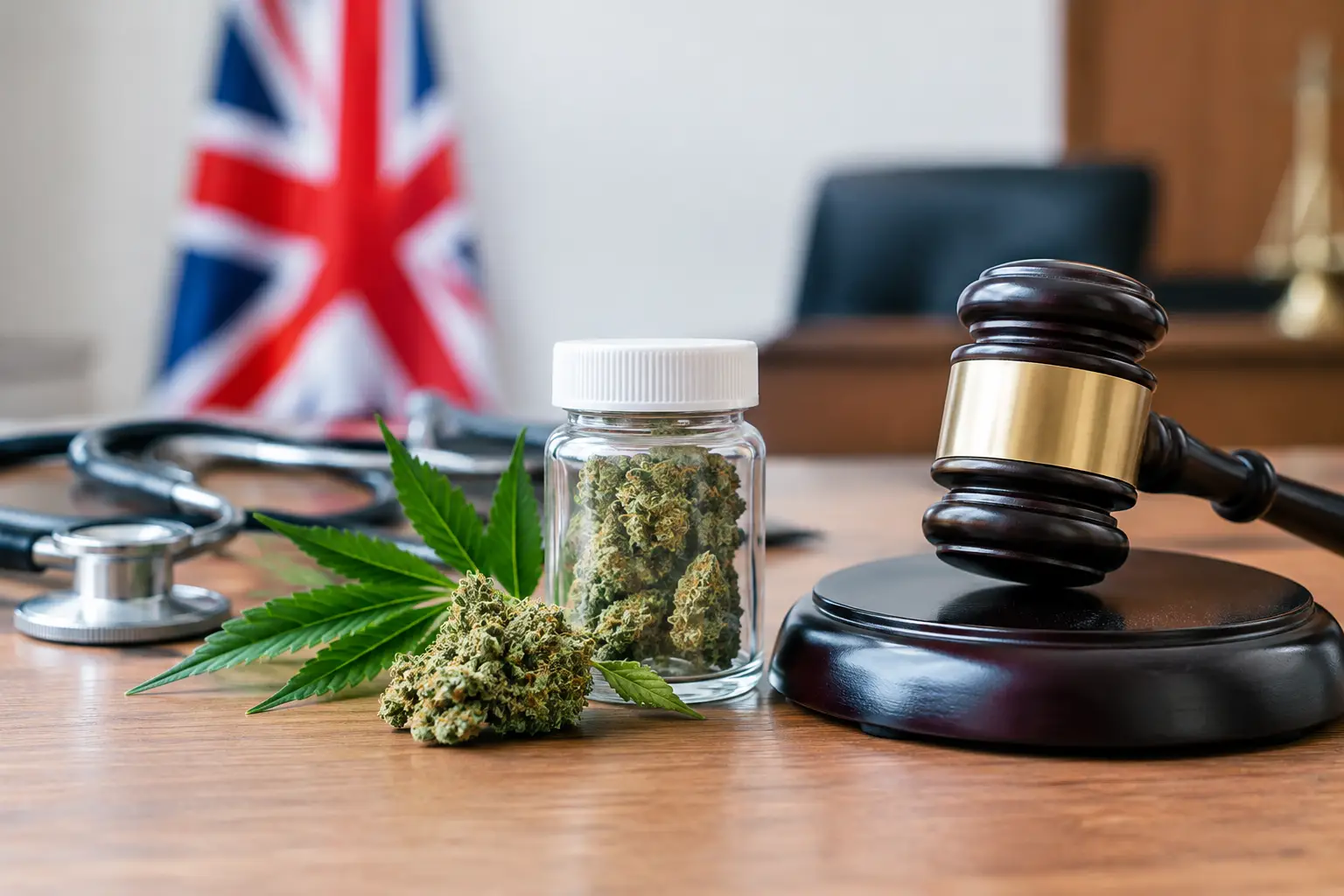
A positive cannabis result does not, by itself, establish unlawful possession, impaired driving or criminal intent. Where medical cannabis is involved, the difference between a lawful prescription, a forensic finding and the prosecution case must be examined carefully. For solicitors and counsel, the central question is often not whether THC was detected, but what the result can reliably prove in the circumstances of the case.
Medical cannabis cases can appear straightforward at first sight. A client may hold a prescription, produce pharmacy documentation or explain that cannabis was used for pain, anxiety, sleep disturbance or another condition. Yet the evidential picture may still be contested. The source of the material, the prescribed formulation, the timing and route of administration, the laboratory method, the applicable driving allegation and the interpretation placed on toxicology results can all affect case strategy.
Why medical cannabis needs careful evidential scrutiny
Since November 2018, certain cannabis-based products for medicinal use have been capable of lawful prescription in the UK. That change did not make cannabis generally lawful, nor did it remove the potential for criminal allegations arising from possession, driving or workplace-related incidents. It created a more nuanced evidential landscape.
A prescription may be highly relevant, but it is not a complete answer to every allegation. It must be considered alongside the precise medicine prescribed, the amount supplied, the directions for use and the evidence concerning the material recovered or the substance detected in a sample. A prescribed cannabis oil, for example, is not necessarily consistent with the possession of cannabis flower. Equally, the fact that cannabis flower is found does not automatically establish that it originated outside a lawful prescription pathway.
Legal teams should also be alert to the distinction between a clinical record and proof of use. A prescription confirms that a clinician authorised a particular product for a particular patient. It does not necessarily show when the product was taken, in what quantity, whether it was used as directed, or whether a blood or urine finding arose from that product rather than another source.
Prescription evidence: relevant, but not self-explanatory
Prescription documentation is often the starting point, not the end point. Clear review should establish the identity of the prescriber and dispensing pharmacy; the medication name, strength and formulation; the date of issue and supply; the stated dosage; and whether the prescription was active at the relevant time.
The wording of the prescription matters. Cannabis-based medicines can differ substantially in their THC and cannabidiol content. They may be supplied as oil, capsules, oral preparations or dried flower intended for administration by a specified method. The expected toxicological findings, potential impairment and consistency with recovered material may therefore differ from case to case.
Packaging, dispensing labels, invoices, clinic letters and communications with the prescriber can assist, but their evidential value depends on provenance and continuity. Where police have seized a product, it may be necessary to examine how it was described, packaged, sampled, stored and analysed. A label alone does not prove contents. Conversely, the absence of original packaging does not inevitably prove illegality, particularly where medication has been transferred for practical reasons. The explanation must be tested against all available evidence.
Drug-driving allegations and the two legal questions
Medical cannabis requires particular care in driving cases because two distinct types of allegation may arise. One concerns driving with a specified controlled drug above the statutory limit. The other concerns driving while unfit through drugs.
For THC, the specified limit in blood is 2 micrograms per litre. A result above that threshold can support an allegation of driving with a controlled drug above the prescribed limit, subject to the statutory framework and the evidence in the individual case. A person using prescribed medication may have a medical defence where the drug was prescribed or supplied for medical or dental purposes and taken in accordance with the prescriber’s directions and accompanying guidance.
That defence is fact-sensitive. It may require close consideration of what was prescribed, what directions were given, what the client says they took and whether the analytical result is consistent with that account. A prescribed product does not provide a blanket exemption from the drug-driving regime.
The impairment allegation is different. Even where a medicine has been lawfully prescribed and taken as directed, a person may still face an allegation that they were unfit to drive. Here, the prosecution evidence may include observations of driving, demeanour, field impairment tests, body-worn video, custody records, collision circumstances and toxicology. THC concentration cannot, on its own, determine impairment. Its relationship with performance is influenced by tolerance, dose, route of administration, time since use and the individual concerned.
A careful forensic review can separate evidence of exposure from evidence of impairment. That distinction can be decisive where broad assumptions have been made from a positive result.
What toxicology can – and cannot – establish
Toxicology is powerful evidence when collected, analysed and interpreted properly. It is not a direct measure of guilt, honesty or functional ability. The relevance of a result depends on the sample type and the question being asked.
Blood can provide evidence of drug concentration at or close to the time of sampling, although there may still be a delay between driving, arrest and collection. Oral fluid is useful for screening and may indicate relatively recent exposure, but it has limitations in relation to concentration and timing. Urine testing can demonstrate prior exposure to cannabis metabolites, often over a longer period, but it is generally poorly suited to determining impairment at a specific earlier moment.
THC is fat-soluble and its concentrations can change substantially after use. Inhalation, oral dosing, frequency of use and individual metabolism all matter. Someone using a prescribed THC-containing medicine regularly may produce results that require a more careful interpretation than a one-off recreational use scenario. It would be unsafe to assume that a particular result proves exactly when cannabis was consumed, the dose taken or the level of driving impairment without considering the scientific limits.
Analytical records should also be reviewed where results are disputed. Relevant issues can include sample continuity, storage conditions, the method used, calibration and quality-control data, reporting limits, uncertainty of measurement and whether confirmatory testing was performed. These are not merely technical objections. They go to the reliability and weight of evidence presented in court.
Recovered cannabis and questions of source
In possession matters, forensic drug analysis may identify cannabis or quantify THC, but it cannot necessarily establish lawful or unlawful origin. The physical characteristics of material may be consistent with prescribed cannabis flower, commercially available cannabis or both. Visual appearance is rarely sufficient to determine source.
The case may turn on a wider evidential assessment. Is there a contemporaneous prescription for a comparable product? Does the quantity align with the prescribed supply? Are the packaging, labelling and batch information available? Has the material been mixed with non-prescribed cannabis? Are there messages, financial records or admissions suggesting another source?
There are also practical issues concerning quantities. Patients may receive medication in amounts that appear unfamiliar to officers or to a court. A quantity that initially appears inconsistent with personal use may be less significant once dosage instructions, supply intervals and the patient’s medical needs are understood. The opposite can also be true. Independent analysis should avoid assumptions in either direction.
Building a clear, court-ready account
A defensible case theory usually requires the medical and forensic material to be brought together early. The relevant documents should be obtained in their original form where possible, alongside the prosecution toxicology and exhibits material. Instructions to an expert should identify the legal issue to be addressed rather than simply ask whether the client had a prescription.
Useful questions may include whether the result is analytically reliable; what it can and cannot show about timing or impairment; whether the detected substances are consistent with the prescribed product; whether the recovered material can be distinguished from the medicine supplied; and whether the prosecution interpretation goes beyond the scientific evidence.
The most effective expert evidence does not advocate for either side. It explains the limits of the science, identifies the points that can properly be drawn from the available material and makes clear where an opinion cannot be offered. This is particularly important in medical cannabis cases, where clinical, legal and toxicological language can easily become conflated.
Bericon Forensics can provide independent review of drug and toxicology evidence, with clear reports and expert witness support where the issues require formal explanation. Early scrutiny can help legal teams identify what further material is needed before positions become fixed.
Medical cannabis evidence should be approached with the same discipline as any other contested forensic issue: establish the facts of prescription and use, test the analytical evidence, and ensure that the final interpretation answers the legal question rather than relying on assumption.

